
From the earliest pages of Scripture, God’s people understood the life of a shepherd. Abel, Abraham, Moses, David, and Amos all knew what it meant to guide, protect, and care for sheep. Shepherding was not sentimental—it was costly, constant, and often dangerous.
So when David wrote, “The LORD is my shepherd” [Psalm 23:1], he was describing more than comfort. He was declaring complete dependence.
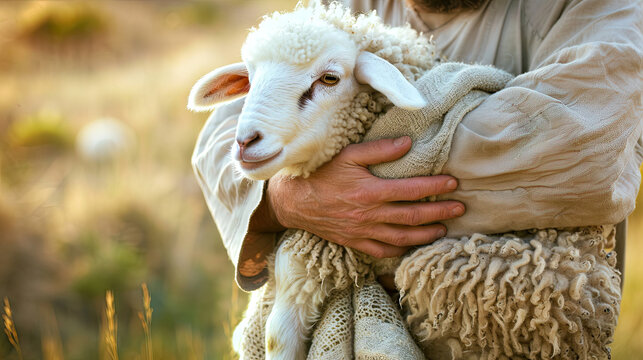
That raises a question, though: If the LORD Himself is the Shepherd… what would it look like if God came to shepherd His people personally?
In John 10, Jesus gives the answer: “I am the Good Shepherd” [John 10:11].
The Good Shepherd is not distant—He’s with you, leading, protecting, and calling you by name. The Shepherd David trusted in Psalm 23 is the Savior speaking in John 10.
And that matters for us, because whether we realize it or not, every one of us is being led by something—our ambitions, our fears, our desires, or the voices around us. Jesus invites us to something different. He offers Himself.
The Shepherd Who Knows Us
Jesus begins with relationship. “The shepherd calls his own sheep by name… and the sheep follow him because they know his voice” [John 10:3–4].
This is not sheep management. This is personal care.
In the ancient world, sheep would separate themselves from other flocks simply by recognizing their shepherd’s voice. That is the picture Jesus gives us. He knows His sheep—and His sheep know Him.
This is where Psalm 23 becomes deeply personal for us: Jesus is not simply a shepherd, but my Shepherd.
Jesus knows our lives fully—our struggles, our fears, our past, and our future—and still calls us. The question is not whether He is speaking, but whether we are learning to recognize His voice.
We hear the Shepherd through His Word, through godly counsel, and through the Spirit’s conviction [John 10:27]. But there are many competing voices—culture, pressure, fear, and our own anxious thoughts. Following Jesus means learning to distinguish His voice from all the others.
The Shepherd Who Leads Us
Jesus then says, “I am the gate” [John 10:7].
In ancient sheepfolds, the shepherd would lie across the entrance. He became the gate. Nothing entered the fold without going through him.
Jesus explains: “I have come so that they may have life and have it in abundance” [John 10:10].
He contrasts Himself with false shepherds—those who “steal and kill and destroy” [John 10:10]. This echoes God’s warning in Ezekiel 34 against leaders who failed to care for His people [Ezekiel 34:2–4].
But God also made a promise: “I myself will search for my flock… I will rescue them” [Ezekiel 34:11–12].
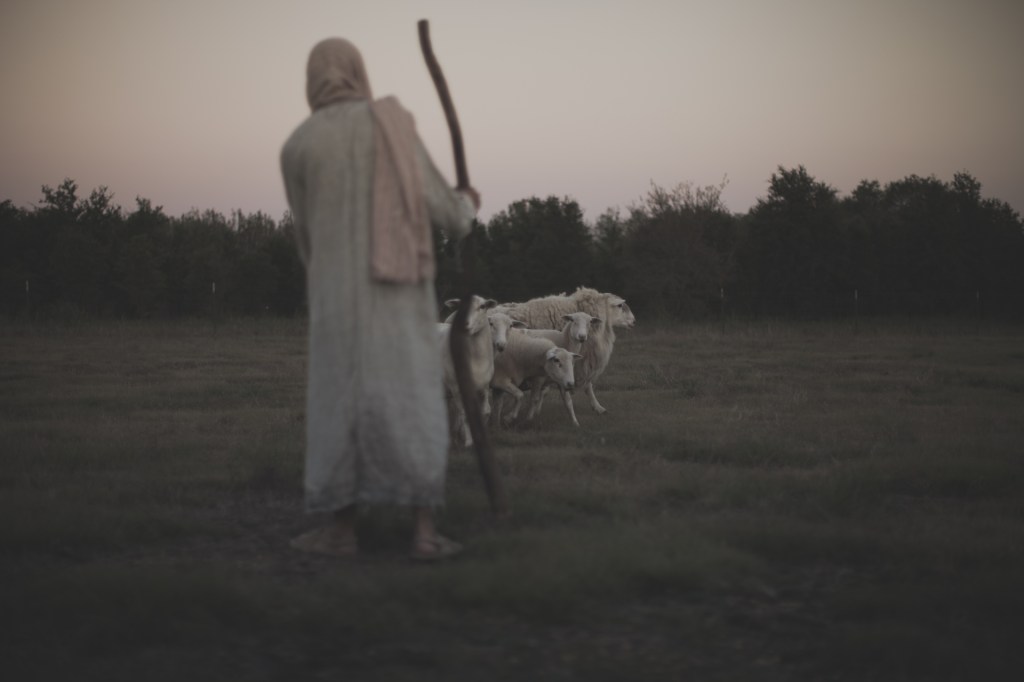
Jesus stands in John 10 and declares that He is that promised Shepherd. The life He offers is not shallow or temporary. It is the abundant life David described—green pastures, still waters, restored souls, and a cup overflowing [Psalm 23:2–5].
And yet, following the Shepherd does not mean an easy path. He may lead through difficulty, waiting, or uncertainty [Psalm 23:4]. But the sheep do not need to know the whole path—they only need to know the Shepherd and remember that He is with them through the darkest days.
The Shepherd Who Saves Us
At the center of this passage is a statement that would have stunned His listeners: “The Good Shepherd lays down his life for the sheep” [John 10:11].
Shepherds might risk their lives—but they did not choose to die for sheep.
Jesus repeats it: “I lay down my life… I have the authority to take it up again” [John 10:17–18]. The cross is not an accident. It is the mission. And the cross is not the end because of Christ’s resurrection [John 11:25-26]
Where a hired hand runs from danger, the Shepherd stands between the sheep and the threat. That is what Jesus has done for us. He stepped between us and the judgment we deserved.
We are all wandering sheep. But the Shepherd did not abandon the flock. He gave His life to save it.
The Shepherd Who Secures Us
Jesus concludes with one of the most comforting promises in Scripture: “My sheep hear my voice… I know them… they follow me. I give them eternal life, and they will never perish” [John 10:27–28]. The Shepherd does not only guide us through life—He secures us for eternity through His death and resurrection.
Psalm 23 ends with this confidence: “I will dwell in the house of the LORD forever” [Psalm 23:6]. Humanity was created for fellowship with God. Sin fractured that fellowship, but it never erased the original design. The journey of life ultimately points toward returning to dwell with the Lord [Revelation 21:3-4].
Jesus makes that promise certain. He knows His sheep. He leads His sheep. He died for His sheep. And He will bring His sheep home.
Come to the Shepherd
Maybe you feel like a wandering sheep today—tired, uncertain, overwhelmed, or far from where you should be. The Good Shepherd is not distant. He is calling.
You don’t become one of His sheep by proving yourself worthy. You come by trusting Him—listening to His voice and following where He leads.
The Shepherd David sang about is the Savior who now speaks. And He has come to bring His sheep home.
Follow me… as I follow the Good Shepherd, JESUS Christ
 following Jesus