
We love renovation shows. Old houses get new floors, fresh paint, updated kitchens, and suddenly everything feels brand new. What once looked worn down becomes beautiful again.

And honestly, that’s how many of us approach our spiritual lives.
If I could just break this habit…
If I could be more consistent in prayer…
If I could control my anger…
If I could speak more kindly…
If I could just get my life back on track…
We treat spiritual life like a home improvement project—assuming a few upgrades will fix what’s broken.

But Jesus steps into that way of thinking and says, renovation isn’t enough.
In John 3, Nicodemus comes to Jesus as a sincere, religious, respected leader. He represents the best version of spiritual self-improvement. Yet Jesus doesn’t offer him advice or techniques. He doesn’t suggest remodeling a few rooms.
He says,
“Truly I tell you, unless someone is born again, he cannot see the kingdom of God.” (John 3:3)
What Nicodemus—and all of us—ultimately need is not a better life, but a new one.
Blind and Born Again
Nicodemus hears “born again” and immediately thinks biology. But Jesus is talking about theology:
“Whatever is born of the flesh is flesh, and whatever is born of the Spirit is spirit.” (John 3:6)
Jesus is drawing on Old Testament cleansing imagery to describe the Spirit’s work of giving new life. New birth is necessary because the old life cannot be repaired.
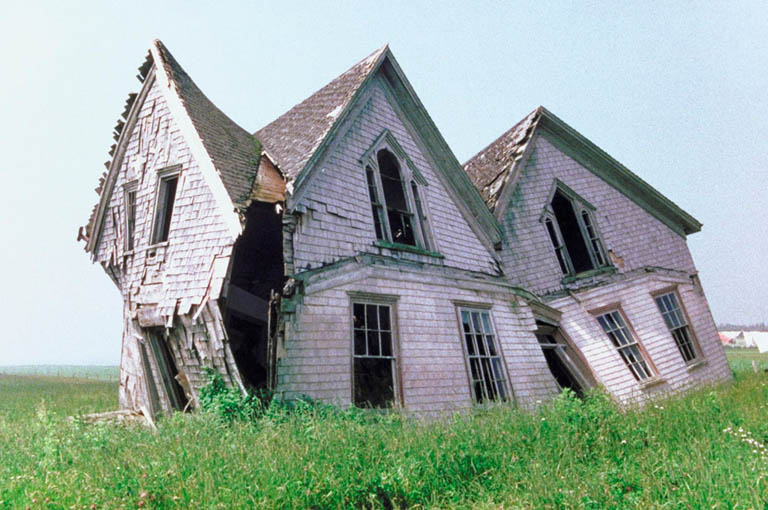
What do you do when the contractor has to stop and say, “We can’t fix this”? The foundation is compromised. The structure itself is failing.
That’s what Jesus is saying. Spiritual blindness can’t be repaired. Spiritual death can’t be renovated. It can only be replaced with life.
Believe and Be Given Life
“How can this be?” Nicodemus asks (John 3:9). He’s not hostile — he’s confused. Because everything Jesus has said so far cuts against how religion normally works.
Religion tells us life comes through effort—Just do it.
Jesus says life comes through belief—Just believe.
To explain this, Jesus takes Nicodemus back to a story he would know well from the Torah. When the Israelites were grumbling against God and Moses in the wilderness between slavery in Egypt and the Promised Land, the LORD sent poisonous snakes among the people because of their sin, and many were bitten and died (Numbers 21:4–9).
Then the Lord said to Moses, “Make a snake image and mount it on a pole. When anyone who is bitten looks at it, he will recover.” So Moses made a bronze snake and mounted it on a pole. Whenever someone was bitten, and he looked at the bronze snake, he recovered. (Numbers 21:8-9)
God didn’t tell them to clean themselves up or promise obedience. He simply told them to look at the bronze snake. And those who looked lived.
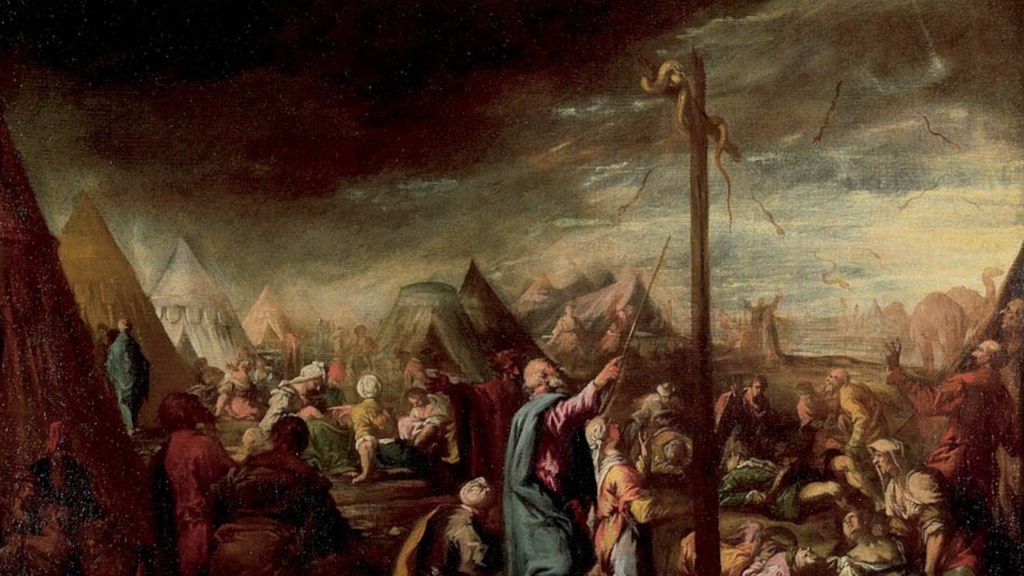
Jesus says that’s how salvation works:
“Just as Moses lifted up the snake in the wilderness, so the Son of Man must be lifted up, so that everyone who believes in Him may have eternal life.” (John 3:14–15)
Notice how clear Jesus makes it.
Not believe and prove it.
Not believe and demonstrate enough change.
Just believe.
This emphasis on belief isn’t isolated to John 3. Lewis Sperry Chafer once pointed out that there are over 150 verses in the New Testament that clearly state eternal life—or justification—is based solely on a person’s faith in Jesus.1
In other words, Jesus was simply stating the consistent message of Scripture. He was stating the consistent message of Scripture: eternal life is received by believing in God’s provision.
God provides salvation through Christ’s death on the cross, and we receive eternal life by believing in Him.
Many rightly say salvation is by grace alone, through faith alone, in Christ alone. But sometimes—with good intentions—some drift toward adding something to faith. Slowly belief stops being trust and becomes something that must be verified.
Jesus doesn’t tell Nicodemus to repent first. He doesn’t demand evidence. He simply says, “believe.“
Belief isn’t mental agreement, and it isn’t moral achievement. Belief is personal reliance. It’s looking away from ourselves and resting fully in what God has provided through Jesus. Salvation is received, not achieved.
John later summarizes his whole Gospel this way:
“These things are written so that you may believe that Jesus is the Messiah, the Son of God, and that by believing you may have life in His name.” (John 20:31)
Yes—obedience matters. Repentance matters. Baptism matters. Growth matters. But they are the result of spiritual life, not the requirement for receiving it.
Salvation is not faith plus something else.
It is faith in Jesus alone.
Loved into the Light
At our house, when someone comes over, the first thing we do isn’t inspect every corner—we turn on the lights. We don’t wait until everything is perfect. We turn on the lights because people are welcome and loved.
Jesus says,
“Anyone who lives by the truth comes to the light.” (John 3:21)
We don’t come into the light to earn love.
We come into the light because we are loved.
“For God loved the world in this way: He gave His one and only Son, so that everyone who believes in Him will not perish but have eternal life.” (John 3:16)
That’s what living in the light of God’s love looks like. We don’t come into the light because we’ve cleaned up our mess. We come because we’re loved.
Darkness is where you hide.
Light is where you live.
Living in the light doesn’t mean living perfectly. It means living openly, honestly, and dependently because we know we’re loved.
It looks like confessing sin instead of covering it.
Showing mercy instead of keeping score.
Doing what’s right even when it costs us.
Walking humbly instead of proving ourselves.
Serving quietly instead of seeking recognition.
Letting God see the real us instead of pretending.
Jesus brings it all together this way: we don’t need spiritual renovation. We need rebirth. And that new life is received by believing in Him.
Nicodemus came to Jesus at night—sincere, searching, well put together. Jesus didn’t give him a checklist. He gave him a promise:
“Whoever believes in Him will not perish but have eternal life.” (John 3:16)
That invitation still stands today.
Belief is not self-improvement. It is spiritual rebirth by grace alone, through faith alone, in Christ alone.
And because God has loved us, we are invited to step into the light—and live.
Follow me… as I follow Jesus Christ.
- Lewis Sperry Chafer, Systematic Theology, Vol. 3 (Dallas, TX: Dallas Seminary Press, 1948), p 376 ↩︎
 following Jesus